How Nha Trang’s Shoreline Shapes the Story of Coastal Leisure
Nha Trang coastal leisure is easier to describe clearly when maps, venue details, and harbor evidence show how entertainment relates to the city’s shore.
The common mistake in writing about Nha Trang coastal leisure is to treat a sea-themed casino or resort as a portrait of the whole coast. That shortcut can blur the difference between a venue’s design, the places visitors use, and the evidence needed to describe local maritime life.
What does the available evidence let you say?
Start with what a source can actually establish. A map can show where a venue sits in relation to a beach, road, or harbor. A photograph can show a visible feature. A venue description can explain how its rooms are presented to visitors. None of these alone establishes the history of a building or the daily use of nearby waters.
This distinction matters especially when an account connects casino culture with Nha Trang’s maritime past. The connection may be a useful subject to investigate, but it needs support beyond a nautical name, ship-shaped decor, or a coastal address. If the available material documents only visitor entertainment, describe that subject on its own terms.
How should a venue’s coastal setting be described?
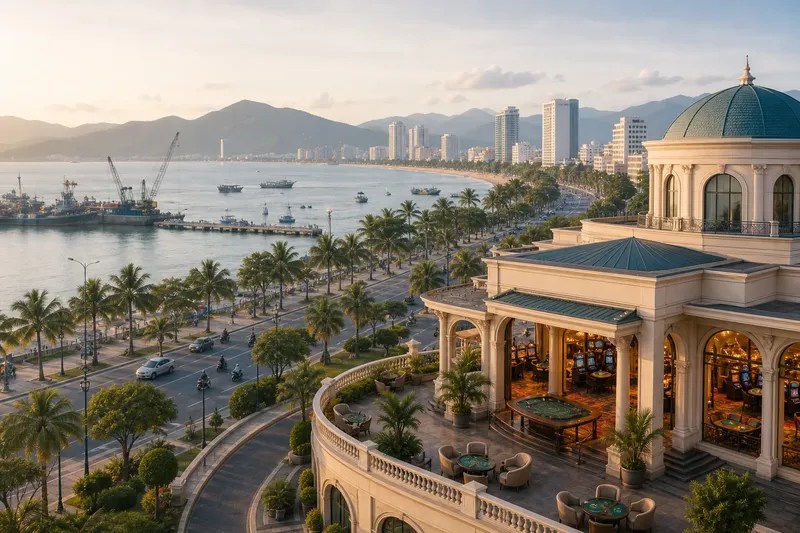
Use precise, limited language. If a map places a venue near a beach, say that it is near the beach; do not call it a waterfront building unless the map or another reliable source supports that description. If promotional material describes a ship-inspired interior, identify it as a design choice rather than evidence of a historical link.
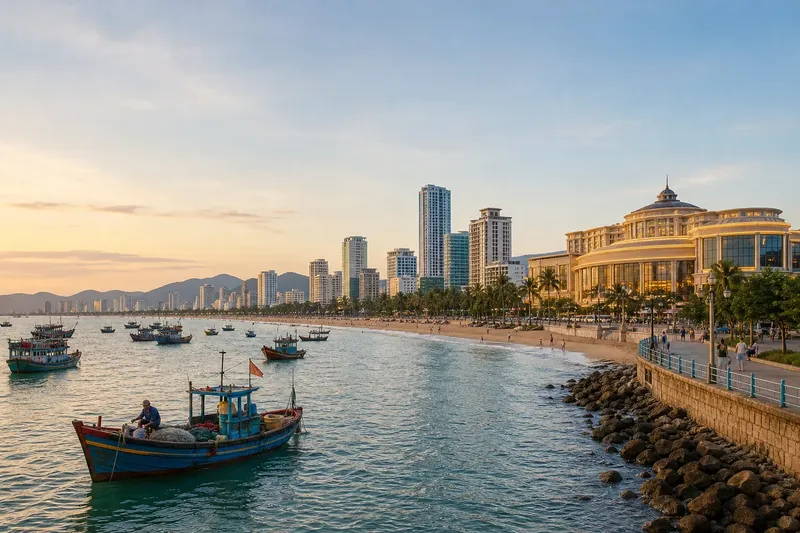
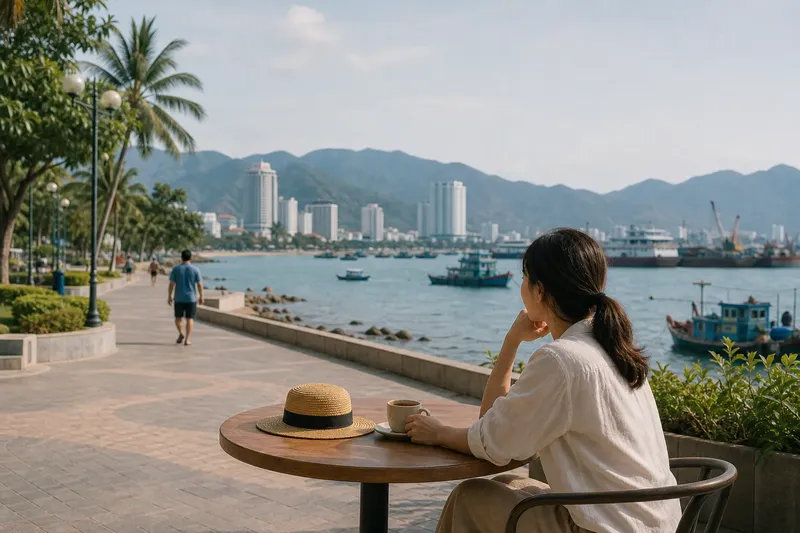
For Nha Trang coastal leisure, this approach keeps the focus on the actual visitor experience without asking the venue to represent the city’s entire relationship with the sea. A promenade view, a beach outing, and an indoor entertainment space are different experiences, even when they appear in the same travel account.
What should a writer check before making a claim?
For each point, identify the observation and decide what wording it supports. If the source does not establish a detail, leave the claim out or describe the uncertainty plainly.
- Map location: If a map places the venue beside a beach or promenade, describe that proximity; if it places the venue elsewhere or gives no clear location, avoid calling it a waterfront venue.
- Source type: If an official venue page describes entertainment or interior design, attribute the claim to that description; if it does not discuss history, do not present a historical connection as established.
- Photographic detail: If a dated or captioned photograph identifies boats or a landing place, describe only what it shows; if the image lacks context, do not infer its date, purpose, or users.
- Working activity: If a reliable account names a harbor activity, explain that activity within its stated scope; if the source offers only a scenic view, do not claim it documents waterfront work.
- Audience: If a source identifies an experience as visitor-oriented, describe it that way; if it does not say who uses a place, avoid assigning the experience to residents or tourists.
- Boat movement: If material documents travel between named places, call it a route; if it advertises a sightseeing outing, describe it as an excursion rather than evidence of everyday transport.
- Historical connection: If a source links a venue to a specific maritime event or practice, explain exactly what it supports; if no such source is available, keep casino culture and maritime history as separate subjects.
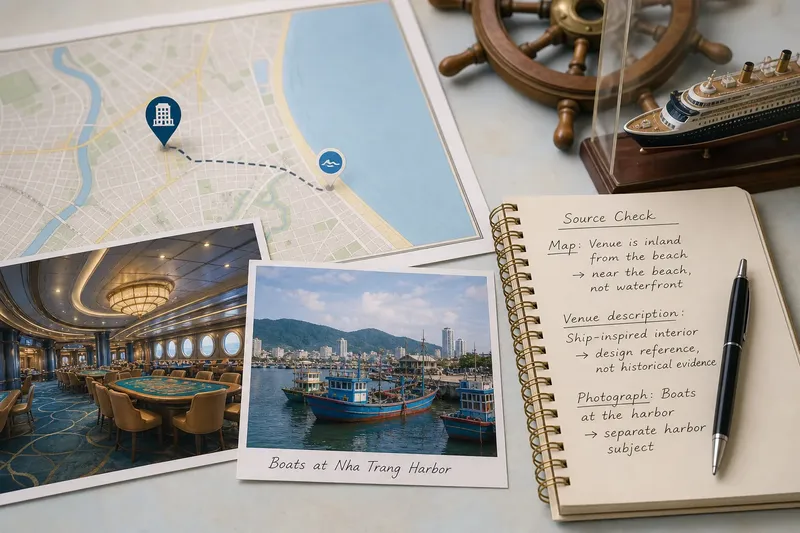
Say you have three hypothetical materials for a short feature: a venue description that mentions a ship-inspired interior, a map that places the building inland from the beach, and a photograph captioned as showing boats at a harbor. First, use the map to describe the venue as part of the city’s visitor landscape, not as a shoreline building. Next, describe the interior as a design reference because the venue text provides no historical link. Finally, use the captioned photograph only to identify the separate harbor subject. The resulting account can discuss coastal leisure and harbor activity side by side, while making no claim that the venue grew from maritime work or history.
Which questions clarify Nha Trang coastal leisure?
Does a sea-themed interior establish a maritime history?
No. It establishes a design reference if the venue’s description or images support that reading. A historical claim needs a source that connects the place to a particular event, practice, or period.
When can a writer call a venue waterfront?
Use that description when a reliable map or source clearly places the building directly on the water’s edge. If the venue is simply near a beach or has a sea view, state that more limited relationship instead.
How is a boat excursion different from a sea route?
An excursion is a leisure activity offered to visitors. A sea route describes movement between places; use that term only when the material documents the connection, not merely a sightseeing trip.
Can casino culture stand for the city’s coastal identity?
It can be one part of a discussion of entertainment, but it cannot represent every coastal use or establish the city’s maritime past. Keep the claim tied to the evidence about the venue and give other documented subjects their own description.
How can a coastal account stay specific?
Build the account around verifiable relationships: where a venue is, what its own materials say about its design, and what separate sources document about the shore. Keep observation distinct from interpretation, and attribute claims when they come from a venue description or a caption rather than independent historical evidence.
That discipline makes Nha Trang coastal leisure easier to understand without flattening it into a single image. A final useful check is to remove any sentence that makes decor, location, or a promotional boat trip carry a historical claim its source does not support.